Did you know that cedar used outdoors can lose its rich color in just a few months if left untreated? Cedar’s impressive ability to resist insects and decay often leads people to believe it is maintenance free, yet this belief can leave wood vulnerable to damage. Clearing up common myths and understanding the different cedar finishes can help you protect your investment, avoid costly mistakes, and keep your cedar surfaces looking beautiful year after year.
Table of Contents
- Cedar Finishes Defined And Common Misconceptions
- Types Of Cedar Finishes And Their Applications
- Key Properties Of Western Red Cedar Finishes
- Maintenance Requirements And Longevity Factors
- Common Application Mistakes And How To Avoid Them
Key Takeaways
| Point | Details |
|---|---|
| Cedar Requires Maintenance | Cedar wood is not maintenance-free; regular care is crucial to prevent damage and extend lifespan. |
| Finishing Types Matter | Selecting the appropriate cedar finish is essential for protection and aesthetics, accommodating different environmental conditions. |
| Proper Application is Critical | Common finishing mistakes can lead to premature deterioration; meticulous preparation and application are vital. |
| Regular Inspection is Key | Bi-annual inspections and timely reapplication of treatments (every 3-5 years) are necessary for maintaining cedar integrity and appearance. |
Cedar Finishes Defined and Common Misconceptions
When it comes to cedar wood finishes, numerous myths and misunderstandings persist that can dramatically impact how homeowners and professionals approach timber treatment. According to RealCedar, Western Red Cedar contains unique extractives that provide natural resistance to insects and decay, but this does not mean the wood is impervious to environmental challenges.
One prevalent misconception is that cedar is entirely maintenance-free. As CedarDoctor expertly points out, cedar actually requires regular maintenance to prevent potential issues like cupping, warping, or splitting. Property owners who assume cedar can simply be installed and forgotten are setting themselves up for potential expensive repairs.
Key misconceptions about cedar wood finishes include:
- Believing all wood oils and timber stains function identically
- Assuming cedar is immune to weathering and degradation
- Thinking that one-time treatment provides permanent protection
- Overlooking the importance of periodic inspection and maintenance
Understanding the nuanced requirements of cedar wood treatment means recognizing that while this timber offers exceptional natural durability, it still demands thoughtful care. Proper finishing involves selecting appropriate treatments, understanding wood characteristics, and implementing a consistent maintenance strategy that protects your investment and preserves the wood’s inherent beauty.
Types of Cedar Finishes and Their Applications
Cedar finishes transform raw timber into durable, protected surfaces that enhance both aesthetics and longevity. The right finish not only preserves the wood’s natural beauty but also shields it from environmental challenges like moisture, UV radiation, and temperature fluctuations. Premium Red Cedar Deck Boards offer an excellent foundation for exploring the diverse world of cedar wood treatments.
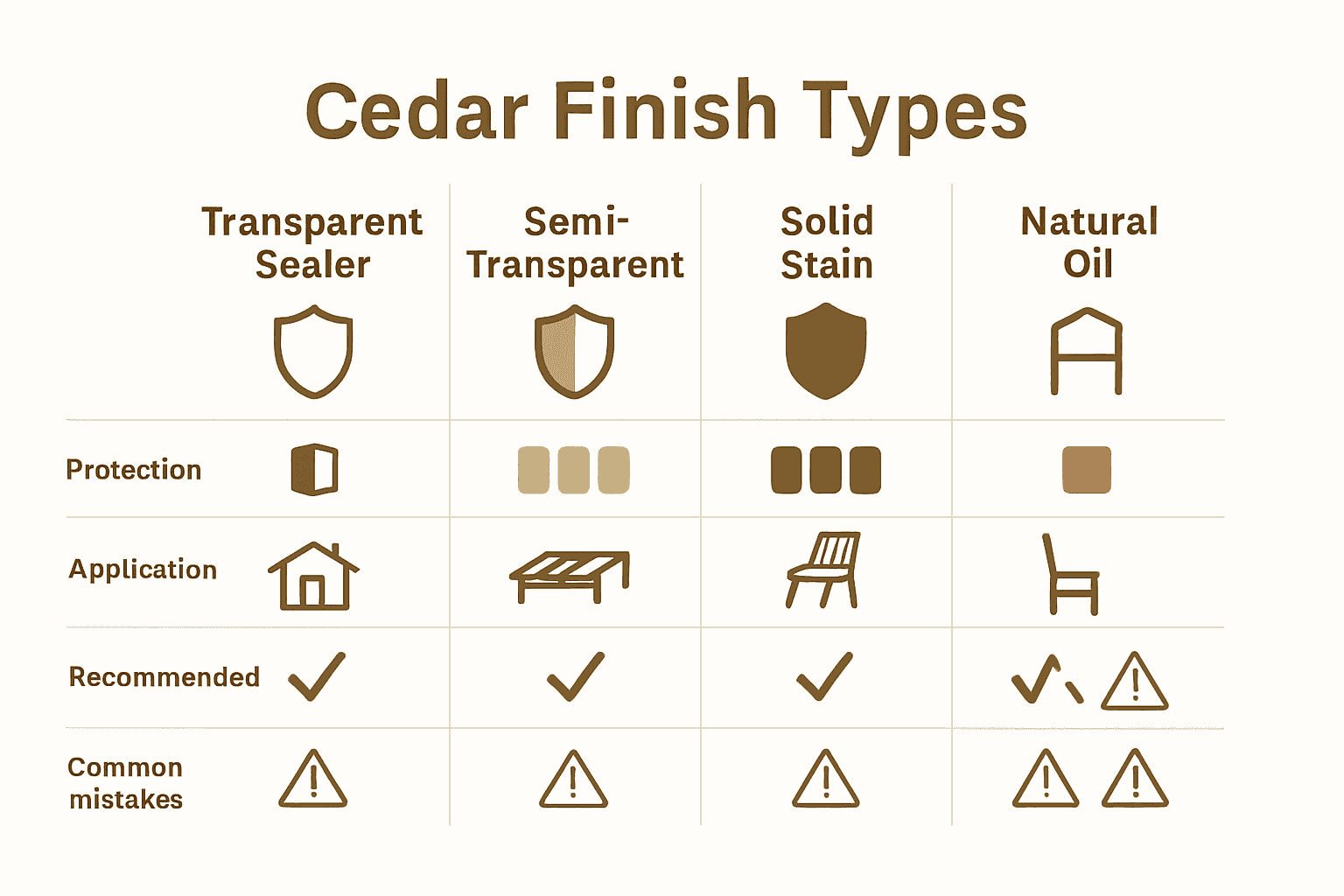
Primary cedar finish types include:
- Transparent Sealers: Showcase the wood’s natural grain and color while providing basic protection
- Semi-Transparent Stains: Add subtle color while maintaining wood texture visibility
- Solid Color Stains: Provide maximum color coverage and comprehensive surface protection
- Natural Oil Treatments: Penetrate deep into wood fibers, offering moisture resistance and UV protection
Each finish type serves a unique purpose depending on the project’s specific requirements. Transparent sealers work brilliantly for architectural features wanting to highlight cedar’s inherent warmth, while solid stains prove ideal for high-traffic exterior surfaces needing comprehensive protection. Professional-grade treatments like Shiplap Western Red Cedar Cladding demonstrate how strategic finishing can dramatically extend a wood product’s functional lifespan.
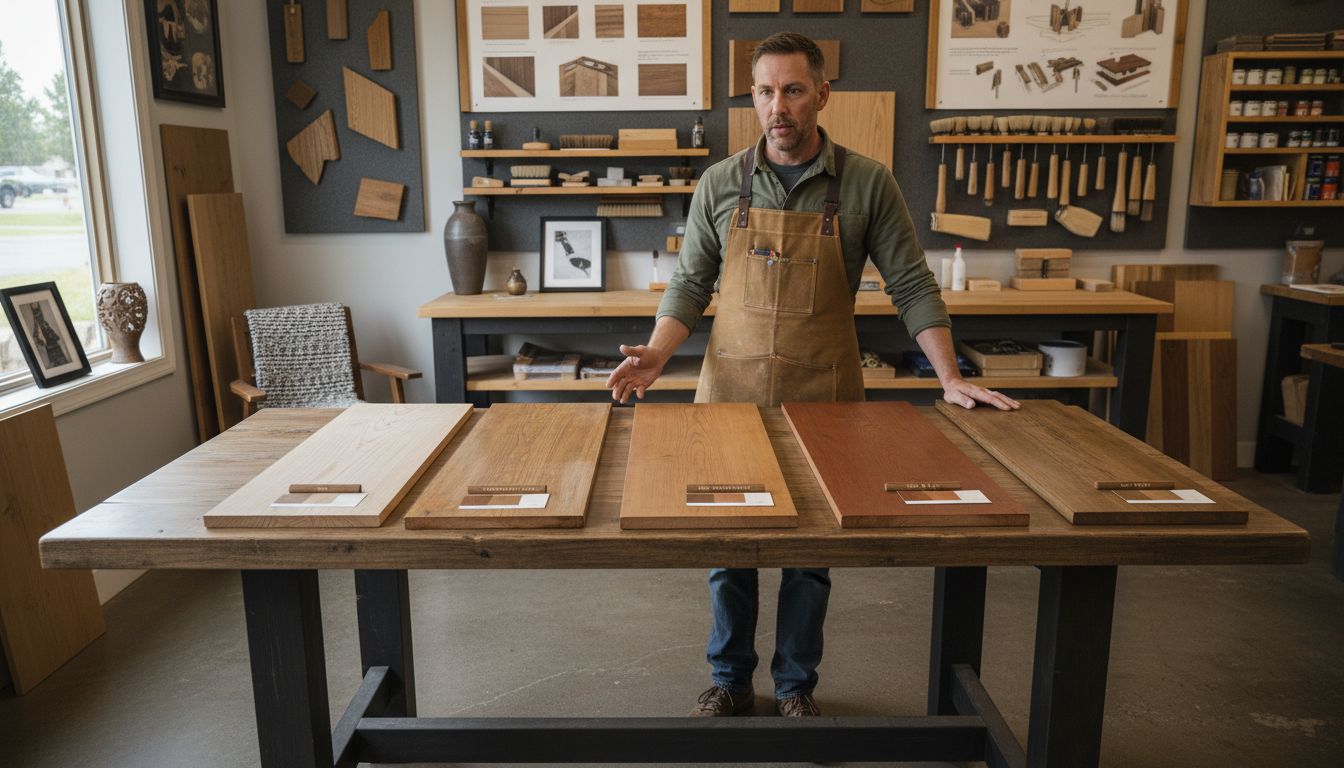
Here’s a comparison of common cedar finish types and their main applications:
| Finish Type | Protection Level | Aesthetic Impact | Typical Applications |
|---|---|---|---|
| Transparent Sealers | Basic | Natural grain visible | Siding Trim Architectural features |
| Semi-Transparent Stains | Moderate | Subtle color, texture shows | Decks Fences Facade accents |
| Solid Color Stains | High | Full color coverage | High-traffic exteriors Structural elements |
| Natural Oil Treatments | Moderate | Enhances warmth | Exterior cladding Outdoor furniture |
Choosing the right cedar finish involves considering factors like exposure level, aesthetic preferences, maintenance capacity, and desired longevity.
 Exterior applications demand more robust protection compared to interior installations, making finish selection a nuanced decision that balances visual appeal with practical performance requirements.
Key Properties of Western Red Cedar Finishes
Western Red Cedar boasts remarkable natural properties that make it an exceptional choice for exterior and interior wood finishing applications. TG&S Western Red Cedar Cladding exemplifies the timber’s inherent qualities that set it apart from other wood species, offering architects and designers a versatile material with extraordinary performance characteristics.
The key properties of Western Red Cedar finishes include:
- Exceptional Dimensional Stability: Minimal shrinkage and expansion compared to other wood types
- Natural Resistance: Inherent protection against decay, insects, and moisture
- Low Density: Lightweight yet structurally robust material
- High Thermal Insulation: Superior heat and sound dampening qualities
- Rich Natural Pigmentation: Warm tones that accept stains and treatments beautifully
Unique cellular structure contributes significantly to Western Red Cedar’s finishing potential. The wood’s tight, interlocking grain allows finishes to penetrate deeply and adhere more effectively than many other timber varieties. This means treatments not only enhance aesthetic appeal but also provide more comprehensive protection against environmental stressors.
Professionals appreciate Western Red Cedar for its forgiving nature during finishing processes.
Its consistent texture and minimal resin content mean fewer complications with adhesion, ensuring that whether you’re applying transparent sealers or comprehensive protective coatings, the end result will be smooth, uniform, and long-lasting. For those seeking detailed guidance on maximizing these exceptional properties, our FAQs offer comprehensive insights into best practices for cedar wood treatment.
Maintenance Requirements and Longevity Factors
Cedar maintenance represents a critical investment in preserving the wood’s natural beauty and structural integrity. Understanding the nuanced care requirements can dramatically extend the lifespan of your cedar surfaces, transforming them from simple architectural elements to long-lasting design features.
According to CedarDoctor, regular maintenance is essential, with oiled or stained cedar typically requiring re-treatment every 3-5 years depending on environmental exposure. This maintenance cycle is crucial to prevent potential deterioration and manage long-term preservation costs.
Key maintenance considerations include:
- Cleaning Frequency: Annual gentle cleaning to remove dirt and prevent organic buildup
- Inspection Intervals: Bi-annual comprehensive surface examinations
- Treatment Cycles: Reapplication of protective finishes every 3-5 years
- Moisture Management: Ensuring proper drainage and minimizing direct ground contact
- UV Protection: Using UV-resistant finishes to prevent color fading and surface degradation
Professional maintenance strategies go beyond simple cosmetic upkeep. They involve understanding cedar’s unique cellular structure and proactively addressing environmental challenges. Factors like local climate, sun exposure, and proximity to moisture sources will significantly influence your specific maintenance approach. By developing a tailored care strategy, you can ensure your cedar installations remain structurally sound and visually stunning for decades.
Common Application Mistakes and How to Avoid Them
Cedar finish applications demand precision and understanding to achieve optimal results. Many professionals and DIY enthusiasts unknowingly compromise their cedar’s performance through seemingly minor but critical errors that can significantly impact long-term wood quality and appearance.
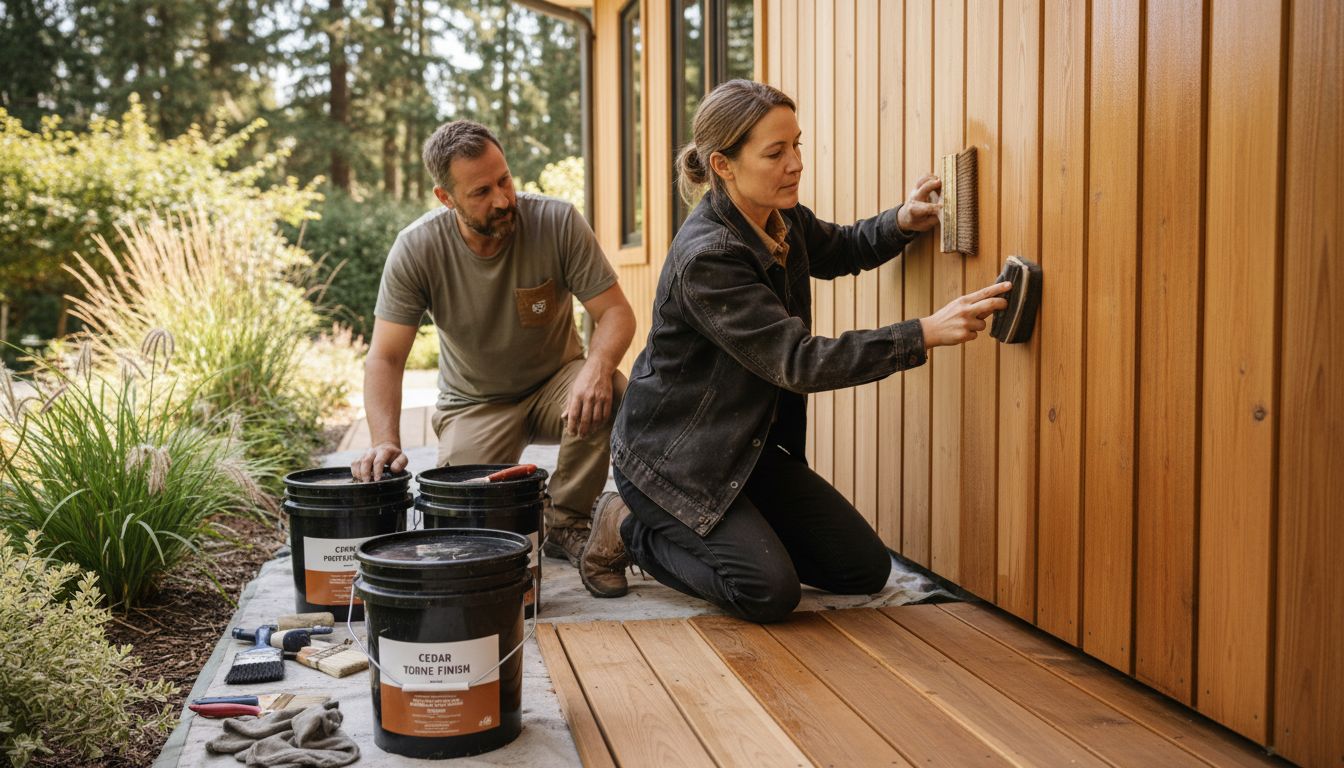
According to CedarDoctor, common mistakes include assuming cedar is maintenance-free and confusing wood oil with timber stain. These misconceptions can lead to premature deterioration and unnecessary additional costs in cladding replacement and repair.
Most frequent cedar finishing mistakes include:
- Insufficient Surface Preparation: Skipping thorough cleaning and sanding
- Incorrect Product Selection: Using inappropriate finishes for specific environmental conditions
- Inconsistent Application: Applying uneven or thick coats of sealant
- Neglecting Moisture Barriers: Failing to protect wood from direct ground contact
- Overlooking Regular Maintenance: Assuming a single treatment provides permanent protection
As CrazyMos emphasizes, proper sealer application requires meticulous preparation. This means thoroughly cleaning the wood surface, ensuring complete dryness, and applying thin, even coats. Professional-grade finishes demand patience and attention to detail, transforming cedar from a simple building material into a long-lasting, aesthetically pleasing architectural element.
Protect and Beautify Your Cedar with Trusted Solutions
Understanding the importance of proper cedar finishes is crucial to preserving the natural beauty and durability of your wood surfaces. This article highlights challenges like maintenance misconceptions and the need for choosing the right products, such as selecting between transparent sealers and solid color stains to protect your investment effectively. If you want to avoid common pitfalls like premature fading or warping, using high-quality materials tailored for Western Red Cedar is key.
Transform your project outcomes with premium cedar products from RedCedarRetail.com. Explore our range of carefully sourced Western Red Cedar siding, decking, and cladding options designed for long-lasting performance and visual appeal. Start your journey toward lasting beauty and dependable protection today by visiting our homepage. Dive deeper into expert advice and detailed product options to ensure every finish meets your exterior timber needs perfectly.
Frequently Asked Questions
What are the different types of cedar finishes available?
Cedar finishes include transparent sealers, semi-transparent stains, solid color stains, and natural oil treatments. Each type serves unique purposes, providing varying levels of protection and aesthetic impact.
How often does cedar wood require maintenance?
Cedar wood typically requires maintenance every 3-5 years for re-treatment, depending on environmental exposure. Regular cleaning and inspections should be conducted annually and bi-annually, respectively, to prolong its lifespan.
What are some common mistakes when applying cedar finishes?
Common mistakes include insufficient surface preparation, incorrect product selection, inconsistent application, neglecting moisture barriers, and overlooking regular maintenance. Proper preparation and attention to detail are crucial for achieving optimal results.
Why is it important to select the right cedar finish?
Choosing the right cedar finish is essential because it affects the wood’s protection against environmental challenges, its aesthetic appeal, and its longevity. The finish type should align with the specific requirements of the project, such as exposure levels and design preferences.